India is witnessing a remarkable shift in its urban landscape. For decades, metropolitan cities like Mumbai, Delhi, and Bangalore attracted millions seeking better opportunities. However, recent data shows a surprising trend: small towns are now growing faster than big cities. This transformation is reshaping India’s economic and social fabric in ways that will define the nation’s future.
According to the 2011 Census and recent economic surveys, tier-2 and tier-3 cities are experiencing population and economic growth rates that outpace major metros. Towns like Surat, Indore, Kochi, Visakhapatnam, Coimbatore, and Jaipur are expanding rapidly. The Indian government’s Smart Cities Mission identified 100 cities for development, with the majority being smaller urban centers rather than established metros.
Data from various sources reveals that between 2011 and 2021, many small towns recorded population growth rates exceeding 25-30%, while major cities saw slower growth of 15-20%. Cities like Nagpur, Lucknow, and Bhubaneswar have emerged as significant economic centers, attracting investments and creating employment opportunities.
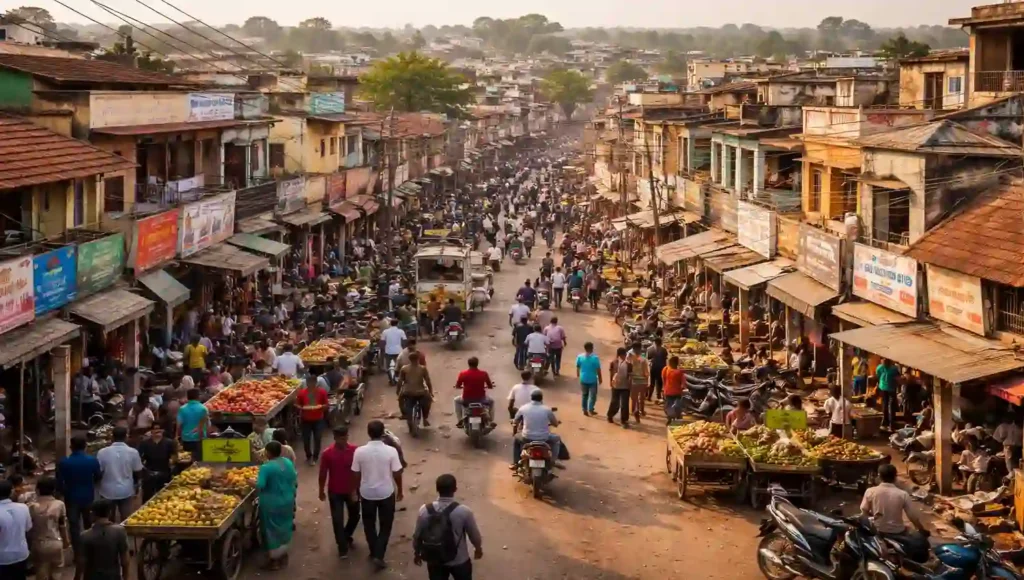
Key Reasons Small Towns Are Growing Faster Than Big Cities in India
Small towns are not just growing in population but also in economic output. The GDP contribution of tier-2 and tier-3 cities has been increasing steadily. Retail consumption in these cities is growing at 15-20% annually, compared to 5-10% in major metros. This shift represents a fundamental change in where Indians choose to live, work, and invest their money. Following are one of the main reasons that why small towns are growing faster than big cities in India.
Better Cost of Living
Housing Affordability Crisis in Big Cities
One of the primary reasons people are moving to smaller towns is affordability. Big cities have become increasingly expensive, with housing costs consuming 40-50% of average monthly incomes in metros. Property prices in Mumbai can reach ₹50,000-₹1,00,000 per square foot in prime locations, making homeownership a distant dream for most middle-class families.
In contrast, small towns offer reasonable rent and property prices. A two-bedroom apartment in Mumbai or Delhi can cost as much as a spacious house with a garden in cities like Nashik, Mysore, or Madurai. Food, transportation, and daily essentials are also significantly cheaper in smaller urban centers.
Real Savings and Better Lifestyle
This affordability allows families to maintain a comfortable lifestyle without the financial stress common in metropolitan areas. A professional earning ₹50,000 monthly in Mumbai might struggle to save money, while the same person in Indore or Coimbatore can save 30-40% of their income while enjoying better housing and amenities.
Young professionals and families are discovering they can save more money while enjoying better living standards in smaller cities. This economic advantage is particularly attractive to the growing middle class looking to build wealth, invest in property, and secure their children’s futures without the crushing financial burden that metros impose.
Improved Infrastructure and Connectivity in Small Towns
Transportation Revolution
The Indian government’s massive infrastructure push has transformed smaller towns. New highways, expressways, and improved road networks have connected tier-2 and tier-3 cities to major metros. The Golden Quadrilateral project, Bharatmala Pariyojana, and dedicated freight corridors have enhanced connectivity across the country.
Cities that were once 8-10 hours from major metros are now just 3-4 hours away thanks to new expressways. The Ahmedabad-Mumbai bullet train project and various regional rapid transit systems are further reducing travel times.
Digital Infrastructure Breakthrough
Internet penetration has reached remote areas through initiatives like Digital India and BharatNet. High-speed internet is now available in most towns, enabling remote work and digital businesses. The expansion of 4G and now 5G networks ensures that small-town residents can access the same digital services as big-city dwellers.
Fiber optic networks have reached tier-2 and tier-3 cities, providing internet speeds comparable to metropolitan areas. This digital parity has eliminated one of the key advantages that big cities previously held.
Airport and Railway Expansion
Railway modernization projects, new airports in smaller cities, and improved public transportation systems have made these towns more accessible. Cities like Bhubaneswar, Coimbatore, Chandigarh, Vadodara, and Rajkot now have excellent connectivity, reducing their isolation and opening new opportunities.
The UDAN scheme has made air travel accessible from 70+ smaller cities, connecting them directly to major business centers. This connectivity has boosted tourism, business travel, and overall economic activity in these regions.
Rise of Remote Work Culture
The Pandemic as a Catalyst
The COVID-19 pandemic accelerated a trend that was already emerging: remote work. When companies were forced to allow work-from-home arrangements, many employees discovered they could perform their jobs from anywhere with good internet connectivity.
This realization sparked a reverse migration. IT professionals, digital marketers, designers, content creators, and other knowledge workers began leaving expensive metros for their hometowns or preferred smaller cities. They could maintain their metropolitan salaries while enjoying the lower cost of living in smaller towns.
Permanent Work-from-Home Policies
Companies like TCS, Infosys, Wipro, and numerous startups have announced permanent work-from-home options for significant portions of their workforce. This flexibility has eliminated the necessity of living in crowded, expensive cities. Many professionals now choose quality of life over proximity to office locations.
The concept of “work from anywhere” has become mainstream. Professionals can now live in hill stations, coastal towns, or their native places while contributing to global companies. This freedom was unimaginable just a decade ago.
Impact on Real Estate and Local Economies
This shift has boosted real estate markets in small towns as returning professionals purchase homes. Local economies benefit from increased spending by these higher-income residents, creating a multiplier effect that generates more jobs and opportunities.
Business Opportunities and Entrepreneurship
Lower Operational Costs
Small towns are emerging as entrepreneurial hubs. Lower operational costs, including rent, labor, and utilities, make it easier to start and sustain businesses. A manufacturing unit that requires ₹1 crore investment in a metro can be established for ₹40-50 lakhs in a tier-2 city.
Office spaces cost 60-70% less than metropolitan areas. Employee salaries, while competitive locally, are typically 30-40% lower than metro standards, making businesses more profitable and sustainable.
Government Support and Funding
Government initiatives like Startup India, Stand Up India, and MUDRA loans have provided funding and support to entrepreneurs in smaller cities. The bureaucratic processes are often simpler, and local authorities are more accessible and supportive of new businesses.
E-commerce platforms have opened national and international markets to small-town businesses, eliminating geographical barriers. A craftsperson in Jaipur or Mysore can now sell products globally through Amazon, Flipkart, or Etsy.
Manufacturing and Industrial Growth
Manufacturing units are increasingly locating in tier-2 and tier-3 cities due to land availability and lower establishment costs. The textile industry in Tirupur, automobile components in Hosur, pharmaceutical manufacturing in Baddi, and food processing units across various small towns demonstrate this trend.
The Production Linked Incentive (PLI) scheme encourages manufacturing across diverse locations, benefiting smaller cities. Industrial corridors are being developed away from congested metros.
Less Competition and Market Opportunities
Local businesses in small towns face less competition compared to saturated metropolitan markets. A well-run café, boutique, fitness center, or service business can thrive in a town where customer loyalty is stronger and operational expenses are manageable. The market gaps are larger, and first-movers often enjoy sustained advantages.
Better Quality of Life in Small Towns as Compared to Bigger Cities of India
Health and Environment Benefits
Quality of life extends beyond income and includes factors like pollution levels, commute times, stress, and community connections. Small towns score higher on most of these parameters.
Air quality in metros like Delhi and Mumbai frequently reaches hazardous levels, with AQI exceeding 400-500 during winter months. In contrast, smaller towns enjoy cleaner air and less environmental pollution. This difference significantly impacts health, particularly for children and elderly family members. Respiratory diseases, allergies, and stress-related illnesses are markedly lower in smaller urban centers.
Time Savings and Work-Life Balance
Commute times in big cities can consume 2-4 hours daily. Mumbai’s local trains carry 7.5 million passengers daily in overcrowded conditions. In smaller towns, most workplaces are within 20-30 minutes from residential areas. This time saving allows for better work-life balance, family time, hobbies, and personal pursuits.
Imagine recovering 15-20 hours weekly that would otherwise be spent in traffic or crowded public transport. This time can be invested in family, fitness, learning, or relaxation—contributing significantly to overall well-being.
Reduced Stress and Mental Health
The slower pace of life reduces stress and anxiety. Small-town residents report higher satisfaction levels despite lower absolute incomes. The pressure to maintain appearances, compete constantly, and keep up with expensive lifestyles is less intense in smaller communities.
Community ties remain stronger, providing social support networks that metropolitan anonymity lacks. Neighbors know each other, children play together safely, and extended families often live nearby—factors that contribute to emotional well-being and security.
Safety and Security
Crime rates in smaller towns are generally lower than in big cities. Streets are safer for women and children. The sense of community acts as a natural deterrent to crime. Parents feel comfortable allowing children to play outdoors or walk to nearby stores—freedoms often impossible in metropolitan areas.
Educational and Healthcare Improvements
Expansion of Quality Education
Historically, quality education and healthcare drove migration to big cities. This advantage is diminishing as small towns develop robust institutions.
Many prestigious educational institutions have established campuses in smaller cities. IITs now exist in Bhubaneswar, Ropar, Jodhpur, Gandhinagar, and other tier-2 cities. NITs, AIIMS, and other top institutions operate across various towns. Private universities like Manipal, Amity, and VIT have multi-city presence.
International schools, coaching institutes for competitive exams, and specialized skill development centers have expanded beyond metros. Parents no longer need to send children away for quality education, keeping families together and reducing costs.
Healthcare Infrastructure Development
Healthcare infrastructure has improved dramatically. Multi-specialty hospitals, diagnostic centers, and specialist doctors are now available in most tier-2 cities. Apollo, Fortis, Max, and other hospital chains have established facilities in smaller urban centers.
Government medical colleges and district hospitals have been upgraded under various national health missions. Equipment, facilities, and specialist availability have improved significantly.
Telemedicine Bridging Gaps
Telemedicine has further bridged gaps, allowing small-town residents to consult top specialists remotely. Platforms like Practo, 1mg, and others connect patients with doctors regardless of location. Complex cases can be diagnosed remotely, with patients traveling to metros only for specific procedures.
Government schemes like Ayushman Bharat have strengthened primary healthcare networks in smaller urban centers. The gap between big city and small-town healthcare is narrowing rapidly, removing a key reason for metropolitan migration.
Government Policies and Incentives
Smart Cities Mission
Targeted government policies are accelerating small-town growth. The Smart Cities Mission allocated ₹48,000 crores to develop 100 cities with smart infrastructure, including intelligent traffic management, waste management systems, water conservation, and citizen services.
Cities like Bhopal, Pune, Jaipur, Ahmedabad, and Surat received significant funding for urban transformation. These investments in infrastructure make smaller cities more livable and attractive to residents and businesses alike.
AMRUT and Other Urban Development Schemes
The AMRUT (Atal Mission for Rejuvenation and Urban Transformation) scheme focuses on water supply, sewerage, and urban transport in smaller cities. Over 500 cities benefit from this program, improving basic amenities and quality of life.
The Swachh Bharat Mission has transformed sanitation infrastructure across towns, making them cleaner and healthier places to live.
Industrial and Investment Incentives
Industrial policies offer tax breaks, subsidies, and exemptions to businesses establishing operations in tier-2 and tier-3 towns. States compete to attract investment to their smaller cities through favorable policies, streamlined clearances, and dedicated industrial zones.
Special Economic Zones (SEZs) and industrial parks in smaller cities offer world-class infrastructure at fraction of metropolitan costs. This policy environment encourages businesses to look beyond traditional urban centers.
Housing and Transportation Schemes
Financial incentives for affordable housing in smaller cities make homeownership accessible. The Pradhan Mantri Awas Yojana prioritizes tier-2 and tier-3 cities, creating housing opportunities unavailable in expensive metros.
The UDAN (Ude Desh ka Aam Nagrik) scheme connects unserved and underserved airports, improving connectivity for 70+ smaller cities. This initiative has transformed regional travel, boosted tourism, and strengthened local economies by connecting them to national and international markets.
Cultural and Social Advantages
Preservation of Cultural Identity
Small towns allow residents to maintain closer connections to their cultural roots and regional traditions. Festivals are celebrated with greater community participation. Local languages, arts, and crafts thrive in these environments.
Unlike metros where culture can feel homogenized and commercialized, smaller towns retain authentic cultural practices. This cultural richness provides identity, belonging, and continuity across generations.
Family and Community Bonds
Extended family systems function better in smaller towns where relatives live nearby. Grandparents can participate actively in raising grandchildren. Family support during emergencies, celebrations, and daily life creates a safety net that nuclear families in metros lack.
Community bonds mean people look out for each other. This social capital has tangible value—whether it’s trusted recommendations, emergency help, or simply the comfort of familiar faces and relationships.
Challenges Remain But Solutions Emerge
Job Diversity and Career Growth
Despite rapid growth, small towns face challenges. Job diversity remains limited compared to metros, though this gap is closing. Traditional industries dominate many small towns, but service sector and knowledge economy jobs are increasing steadily.
Career advancement opportunities, particularly in specialized fields, can be limited. However, remote work, entrepreneurship, and the gradual expansion of industries are creating new pathways for professional growth.
Social Attitudes and Conservative Mindsets
Social attitudes in smaller towns can be conservative, potentially limiting individual freedoms, particularly for women and young people. Progressive ideas about lifestyle choices, careers, and relationships may face resistance.
However, younger generations and increased exposure to broader perspectives through education, internet, and travel are gradually changing mindsets. Small towns are slowly becoming more accepting and cosmopolitan.
Entertainment and Lifestyle Options
Entertainment and lifestyle options lag behind metro standards. High-end restaurants, international brands, cultural events, concerts, and nightlife are limited in most tier-2 and tier-3 cities.
Yet multiplexes, shopping malls, cafes, restaurants, and recreational facilities are appearing in more towns annually. National and international brands are expanding their presence, recognizing the purchasing power and growth potential of these markets.
Infrastructure Gaps
While improving, infrastructure gaps persist. Public transportation systems need expansion. Traffic management, parking facilities, and urban planning require attention as populations grow.
These challenges are transitional. As small towns grow and modernize, they adopt metropolitan advantages while retaining their unique benefits. The key is managed growth that learns from metro mistakes rather than repeating them.
The Future Belongs to Balanced Growth
Sustainable Urban Development
India’s urban future likely involves balanced growth across cities of all sizes rather than continued metropolitan concentration. This distribution offers economic, social, and environmental advantages.
Decongesting major cities reduces pressure on infrastructure, housing, and resources. Delhi, Mumbai, and Bangalore are bursting at their seams. Developing multiple urban centers creates more equitable regional development and distributes economic opportunities across the country.
Economic Benefits of Decentralization
Economically, balanced urban growth reduces regional disparities. When opportunities exist locally, migration pressures ease. Resources can be better utilized when spread across multiple centers rather than concentrated in a few metros.
Small-town growth creates employment closer to where people already live, reducing the social costs of migration—family separation, overcrowded cities, and abandoned rural areas.
Individual and Family Advantages
For individuals and families, small towns offer compelling advantages: affordability, quality of life, reduced stress, strong communities, and increasingly, comparable opportunities. As connectivity improves and opportunities expand, this trend will likely accelerate.
The COVID-19 pandemic proved that physical presence in big cities isn’t always necessary for career success. This realization is permanent and transformative.
A Reimagined Urban India
The growth of small towns represents not just a demographic shift but a reimagining of urban life in India, one where prosperity, opportunity, and quality of life extend beyond a handful of metropolitan centers to hundreds of thriving towns across the nation.
This transformation promises a more balanced, sustainable, and equitable urban future. Young professionals can build careers without sacrificing quality of life. Families can own homes, breathe clean air, and maintain work-life balance. Entrepreneurs can start businesses with reasonable investment and better chances of success.
India’s small towns are not just growing, they are emerging as viable alternatives to the big-city dream, offering a different but equally promising path to prosperity and fulfillment. This shift could well be the most significant urban transformation in India’s modern history.
Also Read: Census Town Vs Statutory Town